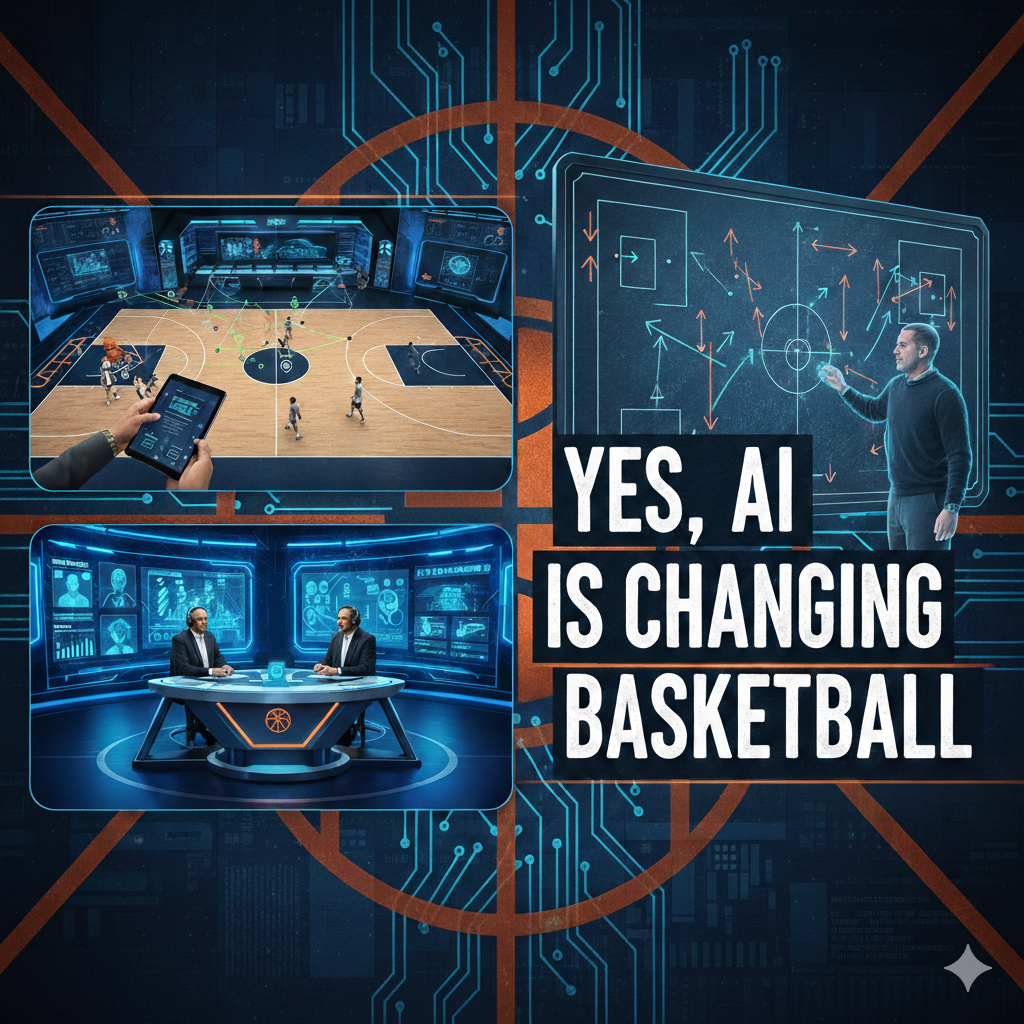
 AI is bleeding into every corner of our lives. A lot of it has been there already, but with investments in Artificial Intelligence projected to hit 2.5 trillion this year, it’s going to be ubiquitous. And since Inerbasket is a basketball website, we’re going to talk about how it’s changing how basketball is analyzed, covered, and discussed.
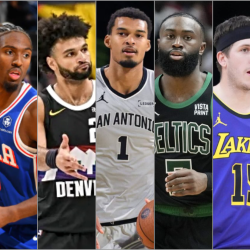
Broadcasters and content teams were manually reviewing footage, tagging key moments, and building storylines – now AI handles a lot of that prep. Advanced tools are letting organizations generate clips, commentary, and insights faster and with greater breadth than ever. A YouTube Short of a last-gap Brandon Miller shot from way beyond the arc, or an interview clip of Kawhi Leonard being asked if he’s the NBA’s best player, can now be identified in a fraction of the time.
AI transforms NBA studio shows
Studio shows generate a mix of analysis, player interviews, and panel discussion. A new generation of tools is indexing everything in real time so that broadcasters can find the moments that mattered the most (speakers, mentions, certain contexts) and jump to those moments quickly – and share them quickly.
New technology means memorable quotes and key insights from hosts and guests can be turned into clips almost instantly. The clips are auto-formatted for every social media platform and the clips are framed vertically. For studios and social media channels, the result is simple: more efficient work and more usable content from every game.
AI tools are delivering real results
Organizations need to move quickly when the biggest moments from basketball games are going viral within minutes. The most advanced AI solutions are built for social platforms and media teams who want to scale their storytelling.
One company providing an AI solution for sports broadcasts, WSC Sports, saw a 67% increase in press content output at the Australian Open. One client beat their league’s official channel (not using WSC tools) in publishing a viral clip 10 minutes earlier. That made the difference in views and engagement. Companies can see significant boosts in views of interviews, ceremonies, and postgame press conferences.
Production
AI frees up creative teams to focus on higher‑level storytelling and fan engagement strategies. Editorial staff don’t have to clip highlights by hand; they can instead work on curating narratives and tailoring content to their audiences.
The technology also allows content to be tailored for different platforms without extra effort. Clips can be auto‑formatted in the ideal size and style for mobile, social media, and broadcast. The optimization means that fans can get relevant basketball analysis in formats that fit how they actually want to watch. That might be a long‑form postgame breakdown or short social clips.
AI in basketball media coverage and fan interaction
The recent changes give fans faster access to insights and highlights. A studio discussion about an upcoming playoffs game can be quickly shared well before tip-off, increasing its reach and relevance. Analytical breakdowns of plays, player performance and strategy can appear in more places and in more languages, broadening their impact.
For broadcasters and content teams, the integration of AI in studio shows and game analysis is not about replacing commentators or analysts but about scaling and enhancing what the experts can offer. Better tools mean less time wrestling with logistics and more time enriching the fan experience with content that they care about.

 60089
60089